Move-out prep • Updated Mar 21, 2026 • 14 min read
Carpet stains: renter-safe removal before move-out
 By Michael Rivera · Updated Mar 21, 2026
It's two weeks before your lease ends and you're staring at a coffee stain on the carpet that's been there since October. Or maybe it's a red wine ring from a dinner party, or a mysterious dark spot near the couch that you've been covering with a rug. Sound familiar? I see these at almost every move-out inspection, and here's what most tenants don't realize: the majority of common carpet stains come out if you use the right technique. The key word is "right"—because the wrong approach (scrubbing, bleach, hot water on protein stains) can set the stain permanently.
I've done move-out walk-throughs for over twelve years, and carpet stains are consistently the number one deposit deduction I see. The frustrating part is that most of them didn't have to be. Coffee, wine, grease, even pet accidents—they all have a specific removal method that works. The expensive mistakes happen when people grab whatever cleaner is under the sink and start scrubbing. That's how a removable stain becomes a permanent one.
Two rules before you do anything else. First: always test your cleaning solution on a hidden area of carpet (inside a closet, behind furniture). Wait ten minutes and check for color changes. A faded test spot in a closet is infinitely better than a bleached patch in the living room. Second: blot, never rub. Every method in this guide starts with the same motion—press a clean cloth straight down, lift, move to a clean section of the cloth, repeat. Work from the outside edge inward. If you remember nothing else from this article, remember that.
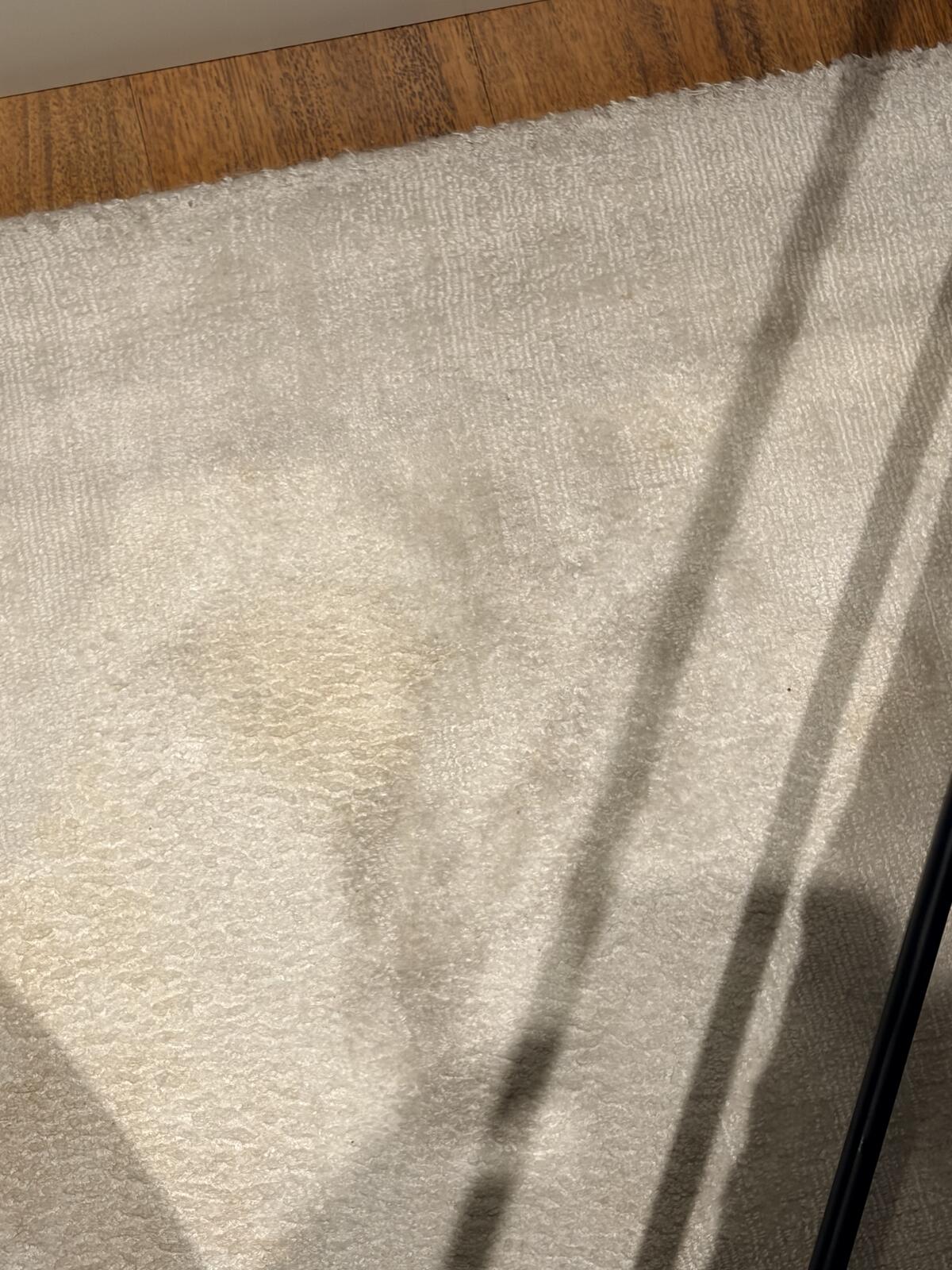
Stain-type diagnostic table
Different stains respond to different chemistry. Using the wrong method wastes time and can make the stain harder to remove later.
| Stain type | Best method | What to avoid |
|---|---|---|
| Coffee / tea | Cold water blot, then dish soap + white vinegar solution | Hot water (sets tannin stains); bleach-based cleaners |
| Red wine | Blot immediately, cold water, then salt or baking soda to absorb; follow with dish soap solution | White wine (myth); rubbing; heat |
| Grease / cooking oil | Baking soda to absorb oil, then dish soap solution | Water first (spreads grease); scrubbing |
| Pet urine (fresh) | Blot thoroughly, cold water rinse, then enzymatic cleaner | Ammonia-based cleaners (smell mimics urine to pets); steam cleaning before enzymatic treatment |
| Pet urine (dried/old) | Enzymatic cleaner with extended dwell time; may need repeated applications | Vinegar alone (does not break down uric acid crystals); heat |
| Mud / dirt | Let it dry completely, vacuum thoroughly, then spot-clean residue | Cleaning while wet (pushes mud deeper into fibers) |
| Ink (ballpoint) | Rubbing alcohol on a cloth, blotting carefully | Water (spreads ink); scrubbing |
| Blood | Cold water only, blot, then hydrogen peroxide (3%) on light carpets | Hot water (sets protein stains permanently) |
Tools and supplies
Gather these before you start. Having everything ready prevents the stain from sitting longer while you search for supplies.
- Clean white cloths or paper towels (white so you can see what you are lifting; dyed cloths can transfer color to wet carpet)
- Cold water in a spray bottle (for controlled application)
- Dish soap (clear, non-bleaching formula; about 1 teaspoon per cup of water)
- White vinegar (for tannin stains like coffee and tea)
- Baking soda (absorbs grease and odors)
- Enzymatic pet cleaner (for urine; brands like Nature's Miracle or similar; available at any pet store)
- Rubbing alcohol (isopropyl, 70%; for ink stains)
- Hydrogen peroxide, 3% (for blood on light-colored carpet only; test first)
- Vacuum cleaner (for pre-treatment and post-drying)
- Optional: small scrub brush with soft bristles (for working solution gently into fibers without aggressive rubbing)
Avoid buying "carpet stain remover" sprays from the grocery store unless you know the carpet type. Many contain optical brighteners or mild bleaches that cause discoloration on certain carpet dyes.
The #1 mistake: rubbing instead of blotting
This deserves its own section because it is by far the most common way renters make carpet stains worse. Here is what happens when you rub a stain:
- The stain spreads. Rubbing pushes the liquid outward, making a small spill into a large one.
- The stain goes deeper. Friction forces the liquid past the carpet fibers and into the pad underneath. Once it is in the pad, surface cleaning will not fully remove it, and the stain wicks back up to the surface as it dries.
- The fibers get damaged. Carpet fibers have a twist pattern. Aggressive rubbing untwists and frays them, creating a fuzzy, matted area that is visible even after the stain is gone. This texture damage can look worse than the stain itself during a move-out inspection.
Correct technique: fold a clean white cloth into a pad, press it straight down onto the stain with firm pressure, hold for 5-10 seconds, lift straight up, rotate to a clean area of the cloth, and repeat. You should see the stain gradually transferring to the cloth. When no more color transfers, you are done blotting.
Step-by-step: coffee and tea stains
Coffee and tea contain tannins that bond to carpet fibers quickly, especially with heat. The older the stain, the harder it is to remove. Fresh spills respond well; old dried stains may need multiple treatments.
- Blot up as much liquid as possible using clean white cloths. Keep pressing with fresh sections of cloth until no more brown color transfers.
- Apply cold water sparingly to the stain. Spray or pour a small amount; do not saturate the carpet. Over-wetting pushes the stain into the pad.
- Blot again with clean cloths.
- Mix a cleaning solution: 1 tablespoon white vinegar + 1 tablespoon clear dish soap + 2 cups cold water.
- Apply the solution to a clean cloth (not directly onto the carpet). Dab the stain gently, working from the edges inward.
- Let it sit for 5 minutes. The vinegar helps break the tannin bond.
- Blot with a fresh damp cloth (water only) to rinse out the cleaning solution.
- Blot dry with a clean towel. Place a stack of paper towels over the area with a heavy book on top for 15-30 minutes to wick out remaining moisture.
- Vacuum after the area is fully dry to restore fiber texture.
For old, dried coffee stains: dampen the stain with cold water and let it sit for 5 minutes to rehydrate before starting step 4. You may need to repeat the entire process 2-3 times. Between rounds, let the carpet dry completely (overnight is ideal) so you can assess whether the stain is fading.
Step-by-step: red wine stains
Red wine is notorious, but fresh spills actually respond well if you act quickly. The anthocyanin pigments bond to fibers over time, so speed matters more here than with almost any other stain.
- Blot immediately. Do not wait. Grab any clean cloth or paper towels and press down firmly. Get as much wine out as possible before it absorbs.
- Apply cold water to dilute what remains. Spray lightly; do not flood.
- Blot again.
- Apply a generous layer of salt or baking soda directly onto the wet stain. Both absorb moisture and pigment. Let the salt/soda sit for 10-15 minutes. You should see it turning pink or purple as it absorbs.
- Vacuum up the salt/soda.
- If color remains, mix a solution: 1 tablespoon dish soap + 1 tablespoon white vinegar + 2 cups cold water. Apply with a cloth, dab gently, let sit 5 minutes.
- Blot with a damp cloth (water only) to rinse.
- Blot dry and assess. Repeat if needed.
For dried red wine stains: Rehydrate with cold water, let sit 5 minutes. Then apply the dish soap + vinegar solution and let it dwell for 10-15 minutes before blotting. Dried wine stains often need 3-4 rounds. If the stain has been there for months, professional cleaning may be the only option.
The "pour white wine on red wine" trick is a myth. All you are doing is adding more liquid to the carpet. Cold water does the same dilution job without the alcohol and sugar.
Step-by-step: grease and cooking oil
Grease stains are different from water-based stains because oil repels water. Pouring water on a grease stain just spreads it. The key is to absorb the oil first, then use a surfactant (dish soap) to break it down.
- Do not apply water. Not yet.
- Blot any excess oil with paper towels if the spill is fresh.
- Cover the stain with baking soda (or cornstarch). Use a thick layer. The powder absorbs oil from the fibers.
- Wait 15-30 minutes (longer for a larger or older stain). The baking soda should start to look clumpy as it absorbs the oil.
- Vacuum thoroughly.
- Check the stain. If a greasy residue remains, apply more baking soda and repeat. For stubborn grease, you may need 2-3 rounds of absorption.
- Once most oil is absorbed, mix a solution: 1 teaspoon clear dish soap in 1 cup of warm water. Dish soap is a surfactant designed to cut grease.
- Apply the solution to a cloth and dab the remaining stain. Let it sit for 5 minutes.
- Blot with a damp cloth (water only) to rinse out the soap. Soap residue left in carpet attracts dirt and creates a dark patch over time.
- Blot dry and vacuum once fully dry.
For old, set-in grease stains: the baking soda step still helps, but you may need to apply a small amount of rubbing alcohol to the cloth before the dish soap step. The alcohol helps dissolve hardened grease. Test in an inconspicuous area first, as alcohol can affect some carpet dyes.
Step-by-step: pet urine
Pet urine is the most challenging common carpet stain because the problem is both visible and chemical. Urine contains uric acid crystals that standard cleaners cannot fully break down. Even after the stain looks gone, the crystals remain and reactivate with humidity, bringing back the smell. This is why enzymatic cleaners are essential, not optional.
Fresh pet urine (you caught it early)
- Blot immediately and thoroughly. Use a thick stack of paper towels. Stand on them to apply pressure and draw moisture from deep in the carpet. Keep replacing towels until they come up dry.
- Apply cold water to the area. Not a lot; just enough to dilute what is left in the fibers.
- Blot again until the towels come up clean and mostly dry.
- Apply enzymatic cleaner according to the product directions. Most require you to saturate the area (the enzymes need to reach everywhere the urine went, including the carpet pad). Cover with a damp cloth or plastic wrap so the area stays moist while the enzymes work.
- Wait the full recommended time. Most enzymatic cleaners need 8-24 hours of dwell time. Do not rush this step.
- Blot dry and let air dry completely. Vacuum once dry.
Dried or old pet urine (you found it late)
Dried urine stains are harder because the uric acid has crystallized. You may also notice a yellow discoloration and a persistent odor, especially in humid weather.
- Locate the stain precisely. A UV blacklight (available at pet stores for under $10) makes dried urine glow, helping you find the full extent of the stain, which is often larger than the visible area.
- Dampen the area with cold water to rehydrate the crystals.
- Apply enzymatic cleaner liberally. The product needs to soak through to the carpet pad, because that is where most of the urine ended up.
- Cover and wait 24 hours. Plastic wrap keeps the area moist so the enzymes stay active.
- Repeat if necessary. Old stains often need 2-3 applications.
- Blot dry, air dry, vacuum.
Important: do not use ammonia-based cleaners on pet urine. Ammonia smells similar to urine to animals and can encourage re-marking in the same spot. Also avoid steam cleaning or using hot water before enzymatic treatment, because heat sets the protein in urine and makes the stain permanent.
Stains that look worse than they are
Not every carpet mark is a deep stain. Before you go through a full treatment, check if your "stain" is actually one of these:
- Furniture indentation. Heavy furniture compresses carpet fibers. Place an ice cube on the dent, let it melt, then fluff the fibers with a fork or your fingers. Most indentations come out this way.
- Surface dirt / traffic patterns. High-traffic areas get darker over time from ground-in dirt, not stains. A good vacuuming (slow passes, multiple directions) often makes a dramatic difference. For stubborn traffic patterns, a rental carpet cleaner machine can help.
- Wax drips. Place a brown paper bag over the wax and run a warm iron on low heat. The wax melts and transfers to the paper. No scrubbing needed.
The timeline matters: act fast, clean better
As a general rule, the sooner you treat a carpet stain, the easier it comes out. Here is why timing matters so much:
- Within minutes: Most liquid stains sit on top of the fibers and blot out with just cold water and cloths. Success rate is high.
- Within hours: The stain has started absorbing into fiber and possibly the pad. Cleaning solutions are needed, but results are still good.
- Within days: The stain has dried and bonded. Rehydration + cleaning solution + repeat treatments. Results vary.
- Weeks or months: The stain may have permanently dyed the fibers. You can still improve the appearance, but full removal may require professional equipment or may not be possible.
Move-out specific tips
If you are treating carpet stains specifically before a move-out inspection, keep these things in mind:
- Start early. Give yourself at least two weeks before the inspection. Some stains need multiple treatments with drying time between each round.
- Check your lease for carpet cleaning clauses. Some leases require professional carpet cleaning at move-out regardless of condition. If that is the case, mention the stain locations to the cleaning company so they can pre-treat.
- Document everything. Take photos before and after your stain treatment. If the stain existed when you moved in, your move-in photos are your defense.
- Do not over-wet the carpet. Excess moisture can cause mildew in the pad, which creates a new problem. Use small amounts of solution and blot thoroughly.
- Vacuum the entire apartment thoroughly after all spot cleaning is done. A clean, well-vacuumed carpet makes a better impression during inspection, even if minor staining remains.
When professional cleaning makes sense
DIY methods have limits. Consider professional carpet cleaning when:
- The stain covers a large area (a full glass of wine across the carpet, a pet accident that soaked through to the pad).
- Multiple stains in the same room make spot cleaning impractical.
- The stain is old and set. If your DIY efforts are not making visible progress after 2-3 rounds, a professional has stronger equipment and solutions.
- Your lease requires it. Many leases include a professional carpet cleaning clause for move-out. If you need to get it done anyway, ask them to focus on stain areas.
- Pet urine has soaked the pad. Surface cleaning cannot fully address urine that has penetrated into the carpet pad. Professionals can treat the pad or recommend replacement of the affected section.
A professional carpet cleaning for a standard apartment typically costs $100-$250. Compare that to a deposit deduction for carpet replacement, which can be hundreds or thousands of dollars.
Last spring I did a move-out inspection where the tenant had a large red wine stain in the dining area—probably eight inches across. She'd tried to clean it the night it happened by scrubbing hard with a bath towel and hot water, which is basically the worst combination for wine: heat sets the tannins and scrubbing pushes them deep into the pad. By the time she called me two weeks before move-out, the stain was set. I told her to try the cold water plus dish soap and vinegar method from this guide, and to do it three times with overnight drying between rounds. She was skeptical but did it. The stain faded about 70%—not perfect, but enough that combined with a professional carpet clean, the landlord didn't charge for replacement. The point is: even old stains are worth trying. You might not get 100%, but going from "obvious stain" to "barely visible" can be the difference between a deposit deduction and a full refund.
When to call maintenance
Carpet stains are generally renter responsibility to clean, but there are situations where you should contact your landlord or property manager:
- The stain was there when you moved in. Compare to your move-in documentation. If the stain pre-dates your tenancy, notify management in writing with photos.
- Water damage caused the stain (a leak from above, a pipe burst, appliance overflow). Water damage from building issues is not your responsibility and should be documented and reported immediately.
- Mold or mildew is present. If the carpet smells musty or you see dark spots that are not stains, this could be a moisture and mold issue that needs professional assessment (see our mold prevention guide).
- The carpet is deteriorating (fraying, coming unglued from the tack strip, developing bald spots from normal wear). Normal wear and tear is the landlord's responsibility in most jurisdictions.
Maintenance request template (copy/paste)
Subject: Carpet stain / damage question before move-out
Hi [Landlord/Office], I am preparing for move-out on [date] and want to address [number] carpet stains in [rooms]. I have been spot-cleaning with renter-safe methods and the stains have [improved / not fully come out]. Would you prefer I arrange professional cleaning, or does the building have a preferred vendor? I can share photos of the areas. I also want to note that [describe any stains that pre-date your tenancy, if applicable]. Thank you.
Quick reference: what NOT to use on carpet
Some common cleaning products are too harsh for carpet fibers or dyes. Avoid these unless you have tested on a hidden area and confirmed no damage:
- Bleach or bleach-based cleaners (will remove carpet color permanently).
- Hydrogen peroxide above 3% (can bleach many carpet dyes).
- Ammonia on wool carpet (can damage wool fibers).
- Nail polish remover (acetone) (dissolves some synthetic carpet fibers and adhesives).
- Iron or heat on synthetic carpet (can melt fibers; only use the iron method for wax on natural fiber carpet at low heat).
FAQ
- Can I rent a carpet cleaner machine from a hardware store? Yes, and it is a good option for overall freshening before move-out. However, for specific stains, spot-treat first with the methods above. Running a machine over an untreated stain can spread it or push it deeper. Pre-treat, let it dry, then machine clean.
- Will my landlord charge me for carpet stains? It depends on your lease, local laws, and the severity. Normal wear and tear (minor traffic patterns, small faded areas) is generally the landlord's responsibility. Specific stains from spills, pets, or negligence are typically the tenant's responsibility. Documentation (move-in photos, cleaning receipts) is your strongest protection.
- What if the carpet is old? In many jurisdictions, landlords cannot charge full replacement cost for carpet that was already past its expected lifespan (typically 7-10 years). If the carpet was old when you moved in, note that in any dispute. However, this does not mean you should skip cleaning; making a good-faith effort looks better than leaving obvious stains.
- Is baking soda safe for all carpet types? Baking soda is safe for most synthetic and nylon carpets. On wool carpet, use it sparingly and vacuum thoroughly afterward, as residue can affect wool fibers over time. It is one of the gentlest options available.
Was this guide helpful? Have a correction or tip? Email [email protected].
Renter for 15+ years. I write practical, landlord-safe fixes I've actually done in my own apartments — no permits, no drama, deposit intact. More about me →