Checklist • Updated Mar 13, 2026 • 12 min read
Under-sink smell checklist: P-trap, disposal, and hidden leaks
 By Michael Rivera · Updated Mar 13, 2026
You open the cabinet under the kitchen sink to grab a sponge and something smells... wrong. Not terrible, but definitely off. Is it the garbage disposal? A leak? Something rotting? The good news is that most under-sink smells have a boring explanation and a quick fix. The bad news is that a few of them are early warnings of a real plumbing problem, so it’s worth spending five minutes narrowing it down before you shrug it off.
I’ve inspected thousands of under-sink cabinets over the years, and I can usually identify the culprit within about thirty seconds just from the type of smell. Sewer-ish means the P-trap probably dried out. Musty means moisture is hiding somewhere. Sour or rotten means food residue in the disposal or a dirty splash guard. Each one has a different fix, and this checklist walks you through all of them.
One thing I want to be clear about upfront: this checklist is about finding the source, not doing plumbing repairs. If you discover an active leak, persistent sewer gas that doesn’t go away after running water, or mold growing on the cabinet wood, stop and contact maintenance. Those are not DIY territory.
Smell types (quick identification)
| Smell | Often means | First action |
|---|---|---|
| Sewer / “rotten egg” | Dry trap, venting issue, or leak | Run water 30–60 sec in that fixture, then re-check |
| Musty / damp | Moisture, hidden leak, wet cabinet | Dry everything, take photos, check for return |
| Sour / rotting food | Disposal residue, dirty splash guard | Clean guard + hot water + dish soap flush |
| Trashy / stale | Bin/recycling area | Wash bin, replace liner, ventilate |
Fast sniff test (where is it strongest?)
- Cabinet wood / floor: musty smell often means moisture.
- Drain area: sewer-ish smell can mean P-trap issues.
- Garbage disposal: sour/rotting smell is usually residue.
Tools & supplies
- Flashlight (leaks hide in shadows).
- Paper towels (to check “is it actively wet?”).
- Dish soap + warm water.
- Microfiber cloth (drying helps you detect return moisture).
- Trash bag (for dirty liners / food residue cleanup).
P-trap basics (why it matters)
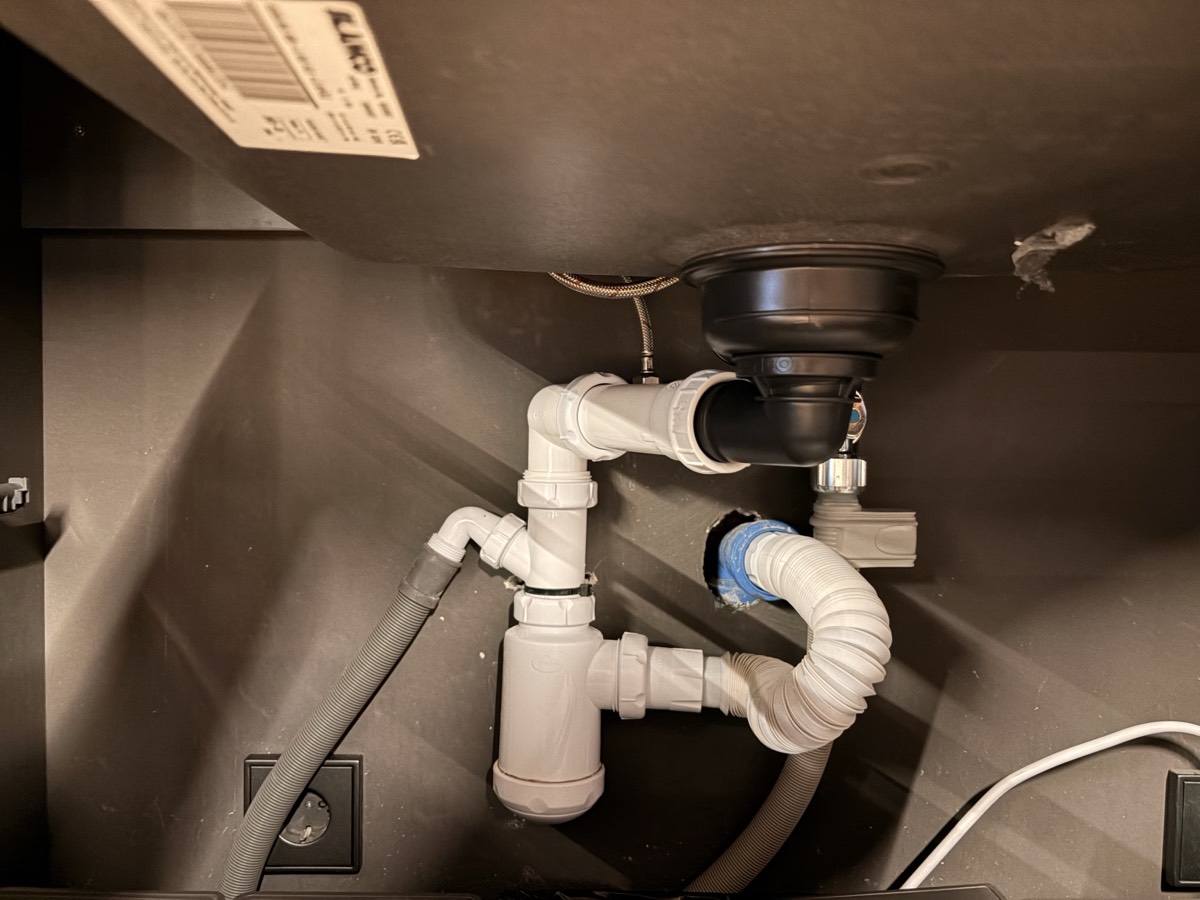
The P-trap is designed to hold water. That water seal blocks sewer gases from entering your cabinet. If the trap dries out (rarely used sink, vacation, or a small leak), odor can rise from the drain.
Checklist
| Check | What you see/smell | Next action |
|---|---|---|
| Look for moisture | Damp cabinet, swelling, dark stains | Photo + report to maintenance |
| P-trap area | Sewer smell near pipes | Run water 30–60 sec; smell improves = trap was dry |
| Disposal splash guard | Sour smell, slime | Clean guard + flush with dish soap and water |
| Trash can / recycling | Smell concentrated there | Wash bin; use liners; ventilate |
Step-by-step (low-risk)
1) Check for hidden moisture
- Remove everything from under the sink.
- Dry the cabinet completely (floor and walls).
- Wrap a dry paper towel around each visible connection (P-trap joints, shutoff valves) and wait 2–3 minutes.
- Look for damp spots. If any connection wets the towel, it’s a maintenance ticket.
1b) Overnight leak test (easy, high signal)
- Line the cabinet floor with dry paper towels (or a piece of cardboard).
- Don’t use the sink for a few hours (or overnight).
- Check in the morning: even a slow drip will show up clearly.
- If the towels/cardboard are damp, take photos and file a maintenance request.
2) Rule out a dry trap
- Run cold water for 30 seconds, then hot for 30 seconds.
- Wait 10 minutes and re-check the smell.
- If the smell returns quickly (same day), there may be a vent/seal issue: call maintenance.
2b) Where sewer smells usually come from
- Dry P-trap (most common): smell improves after running water.
- Loose connection: sewer smell + occasional dampness.
- Venting issue: gurgling sounds + sewer smell that persists.
3) Clean disposal/splash guard residue
- Safety: keep the disposal off; don’t put hands into the unit.
- Scrub the underside of the rubber splash guard with dish soap.
- Flush with hot tap water + dish soap for 60–90 seconds.
3b) Deeper disposal odor routine (still renter-safe)
- Dish soap + hot water flush first (often enough).
- Ice + salt (optional): some people use it to knock residue loose. If you’re unsure, skip it—cleaning the guard + flushing is safer and usually sufficient.
- Don’t pour grease down the drain. It coats pipes and traps food residue that smells later.
4) Check the trash/recycling zone
- Wash the bin and let it dry fully.
- Replace liners and keep the cabinet slightly cracked for airflow (if possible).
Common leak points (quick visual scan)
- Shutoff valves (small drips at the base can wet the cabinet over time).
- P-trap joints (especially after someone bumped the pipe while storing items).
- Disposal connection (where the drain line meets the disposal).
- Dishwasher hose connection (if present).
Dishwasher clue (if you have one)
If the smell appears after running the dishwasher, check under the sink afterward. A small drip from the dishwasher hose connection can create a musty cabinet quickly.
Prevention (2-minute routine)
- Keep the cabinet dry: wipe small spills immediately.
- Run the faucet weekly in rarely used sinks to keep the P-trap wet.
- Don’t store loose chemicals that can spill and create lingering odors.
- Scrape plates before using the sink/disposal—less residue, less smell.
If odors return quickly after cleaning, it’s often moisture, not “dirty dishes.” Focus on finding the source.
I had a tenant once who complained about a mystery smell under her bathroom sink for weeks. She'd cleaned everything, sprayed air freshener, even put baking soda boxes in the cabinet. When I got there and did the paper-towel test around the shutoff valve, I found a tiny drip—barely a drop every few minutes. It had been slowly soaking the particleboard shelf for over a month. The wood was starting to swell and get soft, and that damp-wood-plus-mildew combo was the smell. A quick valve tightening fixed the drip, but the shelf needed replacing. If she'd done the paper towel test earlier, we'd have caught it before the cabinet got damaged. That's why I always tell people: check for moisture first, even if you think the smell is coming from somewhere else.
When to call maintenance (and what to say)
- Moisture returns after drying (hidden leak is likely).
- Persistent sewer smell even after running water.
- Any mold growth on porous cabinet material.
- Soft/swollen wood (water damage progresses fast).
Maintenance request template (copy/paste)
Subject: Under-sink odor / possible leak inspection
Hi [Landlord/Maintenance], there’s a persistent odor under the [kitchen/bathroom] sink. I checked for obvious issues and noticed [sewer smell near the P-trap / musty odor + damp cabinet / possible moisture at a connection]. Could you please inspect for a leak or vent/trap issue and repair as needed? I can share photos and I’m available [times]. Thank you.
FAQ
- Is a sewer smell dangerous? It can indicate sewer gas entering the space. If it persists after running water, report it.
- Should I pour bleach down the drain? Avoid harsh chemicals in rentals; it can damage finishes and won’t fix a trap/vent/leak issue.
- Why does it smell worse at night? Odors are more noticeable when the home is closed up and airflow is lower.
Optional: photo checklist (for your ticket)
- Wide shot under the sink (shows the layout).
- Close-up of any damp connection or stain.
- Paper towel test photo if it shows moisture.
- Timeline note: when you smell it and whether it changes after running water.
Final sanity checks
- Rarely-used sink? Run water weekly so the P-trap doesn’t dry out.
- Smell changes after running water? That points to a dry trap more than “dirty cabinet.”
- Odor + any dampness is a faster maintenance ticket than repeated cleaning.
- If you’re unsure, take photos and send a short note—catching a small leak early protects your deposit.
If you want one simple rule: smell + moisture = maintenance. Cleaning only helps if the source is residue/trash—leaks and venting issues come back.
Stop signs (call maintenance)
- Any active drip or wetness that returns after drying.
- Strong sewer smell that persists after running water.
- Visible mold growth on porous cabinet material.
Was this guide helpful? Have a correction or tip? Email [email protected].
Renter for 15+ years. I write practical, landlord-safe fixes I've actually done in my own apartments — no permits, no drama, deposit intact. More about me →